
Blog
The best sunscreen from iHerb

Have you ever stepped outside in the sun for just a few minutes, only to notice your skin becoming red or irritated afterward? That’s where the true value of sunscreen becomes clear.
Sunscreen is not only about preventing sunburn — it also helps protect the skin from ultraviolet (UV) radiation, which may contribute to premature aging and long-term skin damage. The good news is that sun protection doesn’t need to be complicated. Choosing the right product and applying it correctly can turn sunscreen into a simple and smart part of your daily routine.
Why Is Sunscreen Actually Important?
Ultraviolet rays from the sun are the primary cause of many types of sun-related skin damage. That is why medical organizations strongly recommend limiting direct sun exposure and using a broad-spectrum sunscreen on exposed areas of the body.
The World Health Organization also emphasizes that sunscreen should not be used to extend the amount of time spent in the sun, but rather as part of a complete sun-protection strategy that includes protective clothing, seeking shade, and avoiding intense midday sunlight.
Types of Sunscreens
There are several types of sunscreens, but the simplest classification includes:
- Mineral/physical sunscreens
- Chemical sunscreens
- Hybrid sunscreens
Mineral Sunscreens
Mineral sunscreens typically rely on zinc oxide and titanium dioxide. Dermatologists often recommend these ingredients for sensitive skin because they tend to be gentler and less irritating.
Chemical Sunscreens
Chemical sunscreens contain UV filters that do not rely on zinc oxide or titanium dioxide. These formulas are often lightweight and easy to blend into the skin.
Hybrid Sunscreens
Hybrid formulas combine both mineral and chemical filters to provide balanced protection and texture.
What matters most is not simply the category name, but whether the sunscreen is labeled Broad Spectrum and feels comfortable enough for consistent daily use.
Understanding SPF and Broad Spectrum Protection
Sunscreen labels are extremely important:
- Broad Spectrum means the product protects against both UVA and UVB rays.
- SPF mainly measures protection against UVB rays, which are primarily responsible for sunburn.
Medical organizations generally recommend choosing a broad-spectrum sunscreen with at least SPF 30 for everyday use. The FDA also explains that higher SPF numbers provide greater protection from sunburn, though no sunscreen blocks UV rays completely.
Sunscreen from iHerb
1- iHerb: Cetaphil Sheer Mineral Sunscreen Stick SPF 50
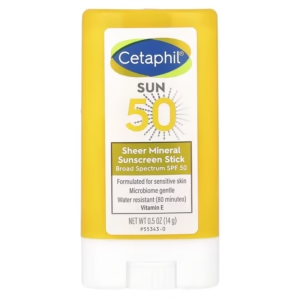
One of the standout sunscreen options on iHerb is Cetaphil Sheer Mineral Sunscreen Stick SPF 50. The product holds a strong rating of 4.4 out of 5 based on more than 5,256 reviews. It offers Broad Spectrum SPF 50 protection, is designed for sensitive skin, water-resistant for up to 80 minutes, fragrance-free, paraben-free, non-comedogenic, and formulated as a 100% mineral sunscreen stick.
Why Might It Be an Excellent Choice?
This sunscreen combines strong protection with convenience. Its stick format makes it especially practical for quick application around the nose, near the eyes, or while traveling.
The American Academy of Dermatology notes that sunscreen sticks are particularly suitable for use around the eye area. It also explains that mineral sunscreens containing zinc oxide and titanium dioxide are often ideal for sensitive skin.
This aligns well with the product’s active ingredients:
- Titanium Dioxide 6%
- Zinc Oxide 4.7%
How Does It Help the Skin?
This sunscreen helps prevent sunburn because it provides broad-spectrum protection against both UVA and UVB rays. Its 100% mineral formula also makes it appealing for those looking for a gentler sunscreen option.
The inclusion of Vitamin E further enhances its appeal for people interested in maintaining a balanced skincare routine.
Additionally, its 80-minute water resistance makes it more suitable for hot weather and outdoor activities, although medical authorities still recommend reapplying sunscreen after swimming or heavy sweating.
How to Use Sunscreen Correctly
Apply sunscreen approximately 15 minutes before sun exposure and use a sufficient amount to cover all exposed areas of the skin.
Reapply every two hours, or sooner after swimming or sweating.
It’s also important to remember that no sunscreen is completely waterproof. Products are only classified as water-resistant for either 40 or 80 minutes based on testing standards.
For the best protection, combine sunscreen with:
- Protective clothing
- Hats
- Sunglasses
- Seeking shade whenever possible
If you’re looking for a sunscreen that combines high protection, a mineral-based formula, and convenient application, Cetaphil Sheer Mineral Sunscreen Stick SPF 50 from iHerb appears to be a strong option — especially for sensitive skin or for those who prefer the practicality of a sunscreen stick in everyday life.
To purchase the product directly from iHerb, use the following link: Sunscreen from iHerb
In the end, the best sunscreen is not necessarily the one with the highest SPF number, but the one you will consistently use correctly every day. Make sun protection a simple and comfortable habit, and over time your skin will thank you for it.
Medical References