
Blog
Benefits of melatonin for sleep


Do you struggle with sleep? Before we explain the benefits of melatonin for sleep, let’s ask you a few questions first:
-
Do you take more than 30 minutes to fall asleep?
-
Does your sleep pattern change frequently due to travel or shift work?
-
Have you previously used sleep supplements such as melatonin or calming strips?
If your answer is “yes” to any of the above, then this article is for you.
We’ll explain what melatonin is, how it works, the evidence-based benefits, and when it should be used.
What Is Melatonin?
Melatonin is a natural hormone produced by the pineal gland in the brain in response to darkness. It is one of the main regulators of the circadian rhythm (biological clock) and signals the body that it is time to sleep.
Small amounts are also produced in other parts of the body, and melatonin can be manufactured as a dietary supplement.
How Does Melatonin Work?
Melatonin acts in the brain through specific receptors (MT1 and MT2) and influences the suprachiasmatic nucleus (SCN)—the body’s master biological clock.
It helps reduce alertness and increase sleepiness.
Melatonin is not a strong sedative. Instead, it works as a “time cue”, helping to adjust the timing of sleep and wakefulness.
Evidence-Based Benefits of Melatonin
1- Helps You Fall Asleep Faster (Reduced Sleep-Onset Latency)
Many studies show that melatonin can help people fall asleep more quickly, especially those with delayed sleep phase disorder or jet lag.
The effect varies depending on the cause of sleep difficulty, dosage, and timing.
2- Useful for Lifestyle-Related Sleep Disorders
In conditions such as jet lag, shift work disorder, and delayed sleep phase syndrome, melatonin has shown effectiveness in resetting sleep timing and improving sleep quality.
3- Improves Sleep Quality in Older Adults and Some Chronic Insomnia Cases
Evidence reviews suggest that certain forms of melatonin—particularly prolonged-release formulations—may improve sleep quality in older adults and enhance morning alertness.
4- Other Areas Under Research
Ongoing research is exploring melatonin as a supportive option in conditions such as neurological-related insomnia and sleep-disordered breathing.
Summary
Melatonin is especially useful as a sleep-timing regulator, particularly when sleep disruption is related to circadian rhythm misalignment, travel, or shift work.
Melatonin Supplements for Sleep
1- Shifaa Nutrition: Halal Melatonin (Chewables)
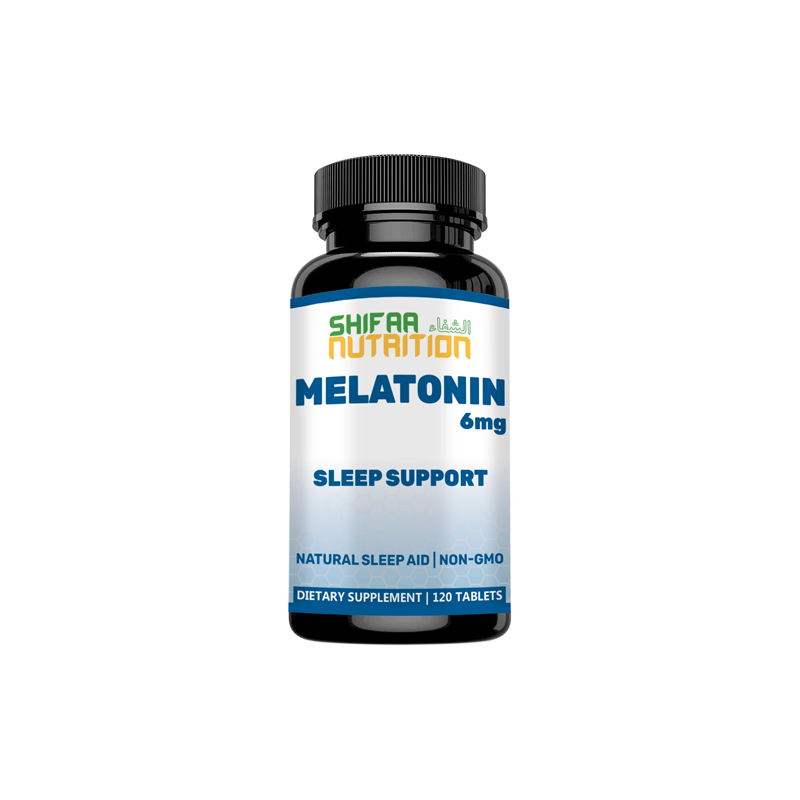
Product details:
-
Chewable tablets available in 3 mg (120 servings) or 6 mg (60 servings) per piece
-
Halal-certified, manufactured in a registered facility following GMP guidelines
-
Fast-dissolving, designed to support relaxation, sleep, and reduce travel-related fatigue
To learn more about the product, read the details here:
Melatonin Supplements for Sleep
When Should You Take Melatonin Supplements?
When to Consider Using Melatonin:
-
Circadian rhythm disorders (jet lag, shift work, delayed sleep phase): melatonin helps reset the internal clock
-
Difficulty falling asleep: a low dose may help initiate sleep
Typical Dosages
-
Commonly cited clinical doses range from 0.3 mg to 5 mg taken before bedtime
-
Some chewable products use 3 mg or 6 mg, as in the product above
-
Research suggests that lower doses (0.3–1 mg) may be sufficient for circadian regulation in some people
-
Higher doses may cause dizziness or morning grogginess
Recommendation:
Start with a low dose (0.3–1 mg) and increase only if needed and preferably under medical guidance.
Timing
-
Take melatonin 30–90 minutes before bedtime, depending on the formulation
-
For jet lag or shift work, timing can be adjusted according to travel or work schedules
Safety Considerations
-
Short-term use is generally considered safe
-
Long-term safety data are less clear, so melatonin is best used as a temporary aid or under medical supervision
Ready to Try Melatonin Supplements?
If you want a practical solution for faster and more consistent sleep, follow these smart steps:
-
Start with the basics:
Improve sleep hygiene—limit screen use before bed, keep consistent sleep and wake times, and create a dark, quiet sleeping environment. Melatonin works best when these habits are in place. -
Try a low dose (0.3–1 mg) for two weeks if your goal is to reset sleep timing.
If lower doses are unavailable, you may try 3 mg for one test night, but watch for morning drowsiness. -
Choose the right product for your needs:
If you’re looking for a halal, chewable melatonin option for travel support or circadian rhythm adjustment, consider Shifaa Nutrition Halal Melatonin (3 mg / 6 mg chewables).
Always store supplements away from children and read the dosage label carefully.
Medical Sources:
-
Melatonin: Usage, Side Effects, and Safety