
Blog
Benefits of Coconut Oil


Hair and skincare today increasingly favor safe and effective natural ingredients. Plant oils are considered natural moisturizers that create a barrier to lock in moisture and protect the skin and hair from dryness and damage. Among these oils, coconut oil stands out due to its content of medium-chain fatty acids (such as lauric acid), which provide moisturizing, antimicrobial, and hair-protective properties. Numerous scientific studies and reviews have examined the topical use of coconut oil for hair and skin, showing supportive results for its use as a natural care option.
5 Benefits of Coconut Oil
1. Moisturizing the Skin and Protecting the Skin Barrier
Coconut oil acts as an emollient, filling gaps between skin cells and strengthening the lipid barrier of the stratum corneum. This helps reduce transepidermal water loss (TEWL) and improves skin softness. Laboratory and clinical studies have shown that topical application of coconut oil improves and relieves dry skin and may help in certain skin conditions.
2. Reducing Local Inflammation
Compounds found in coconut oil, especially in virgin coconut oil, have demonstrated anti-inflammatory and antioxidant activities in laboratory studies and some clinical contexts. These properties help soothe skin irritation and reduce inflammatory markers in certain skin disorders.
3. Protecting Hair and Reducing Protein Loss (Hair Strengthening)
Coconut oil can penetrate the hair shaft to a certain extent due to its molecular structure, helping reduce protein loss in both damaged and undamaged hair when used before and after washing. Comparative studies among various oils have shown that coconut oil is unique—compared to olive oil and others—in providing measurable protection against protein loss.
For this reason, it is commonly used to protect hair ends, reduce split ends, and enhance hair shine.
4. Antimicrobial Activity (Beneficial for Oral and Skin Hygiene)
Coconut oil contains lauric acid, which is converted in the body into monolaurin, known for its antibacterial, antiviral, and antifungal properties. Laboratory studies and small clinical trials support the idea of using coconut oil (such as in the “oil pulling” technique) as a complementary option for oral health, helping reduce certain microbial causes and gingivitis.
5. Practical Cosmetic Uses (Cleansing, Conditioning, Masks)
Coconut oil can be used:
-
As a natural makeup remover that dissolves oil-based cosmetics easily before washing.
-
As a pre-wash hair mask to increase moisture and reduce breakage.
-
As an ingredient in moisturizing treatments for elbows and knees.
Many of these uses are supported by clinical observations and professional experience, although results may vary depending on skin type and whether the oil is refined or virgin.
Coconut Oil Product
1- Coconut Oil (Natural)
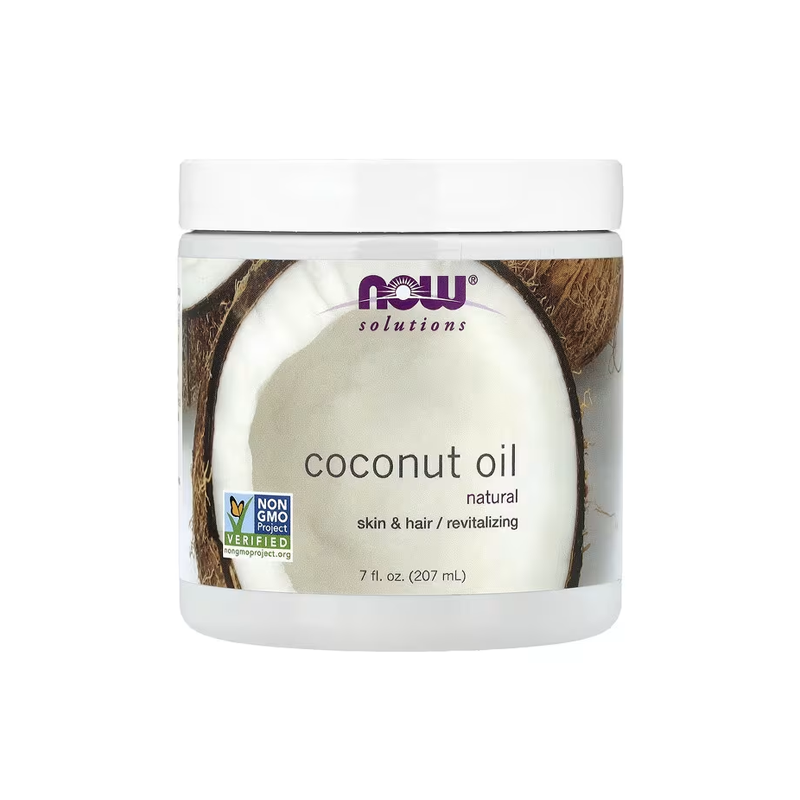
A natural coconut oil mechanically extracted and deodorized, suitable for use on hair and skin. Packaged in a 7 fl oz (207 ml) container.
How to Use This Product
For hair:
Apply a small amount to the ends of the hair or use as a mask for 30–60 minutes before washing. Shampoo afterward to remove excess oil.
For dry skin:
Apply a thin layer to dry areas (such as elbows and knees) after showering while the skin is still slightly damp to lock in moisture.
As a makeup remover:
Apply a small amount to a cotton pad, gently wipe, then wash your face with a suitable cleanser.
Always start with a small amount and test on a small area to ensure it does not clog pores or cause sensitivity.
To learn more about the product details, visit the following link:
Coconut Oil
Coconut oil is a versatile natural option: it moisturizes the skin, protects hair structure and reduces protein loss, and offers antimicrobial effects thanks to lauric acid. If you are looking for a simple and natural product to try in your beauty routine—whether as a hair mask, topical moisturizer, or natural makeup remover—coconut oil can be a valuable addition to your care shelf.
However, remember to choose the type that fits your needs (virgin for nutritional and antioxidant benefits, or refined/deodorized for odor-free cosmetic use).
Medical and Scientific Sources
-
Rele AS, Mohile RB: Effect of mineral oil, sunflower oil, and coconut oil on hair.
-
Benefits of coconut-based hair oil via hair porosity studies.